Key Features for Long-Haul Generator Performance
When a generator runs for hours or days at a stretch, small design details become critical. Features that matter little during a short power outage can make the difference between reliable operation and a costly shutdown. For anyone who depends on industrial generators for extended runtime - whether on a construction site, at a remote facility, or as backup for essential infrastructure - understanding what to look for helps avoid downtime and protect equipment.
Fuel Systems That Keep Going
Fuel supply is the first thing to think about for long operating periods. A generator that runs for twelve hours on a single tank is one thing; one that needs refueling every four hours is a different proposition entirely. Large fuel tanks are the obvious answer, but the real consideration is how well the generator manages fuel over time.
A sub-base tank that sits under the generator frame adds significant runtime without taking up extra floor space. For installations where the generator is stationary, a connection to a bulk fuel tank with a day tank system keeps the generator fed automatically. The day tank holds a small reserve and refills from the main tank as needed, which also helps with fuel quality - the fuel stays fresher and water condensation is less of a problem.
Fuel filtration matters more than most people realize. Even clean fuel can pick up dirt and water in storage, and a clogged filter will starve the engine. A dual-filter setup with a vacuum gauge lets the operator see when the primary filter is getting dirty and switch to the secondary without stopping the generator. That feature alone can prevent an unscheduled shutdown in the middle of a long run.
Cooling Under Continuous Load
Generators produce heat, and continuous operation means that heat builds up. Air-cooled generators depend on a steady flow of cool air through the enclosure. In a hot environment or when the generator is working hard, the cooling system has to handle the load without allowing the engine or alternator to overheat.
Larger industrial generators often use a radiator and fan arrangement similar to a vehicle cooling system. This is more effective than simple air cooling for sustained high loads. The radiator should be sized for the expected ambient temperature, not just the standard rating. A generator rated at 100 percent load at 40 degrees Celsius will struggle at 50 degrees if the cooling system is marginal.
Another consideration is the enclosure itself. A weatherproof housing that traps heat can shorten component life. Look for designs that separate the engine compartment from the alternator and control panel, with dedicated cooling paths for each. Some enclosures include thermostatically controlled exhaust fans that only run when needed, which saves power and reduces noise during cooler periods.
Control and Monitoring for Extended Runs
When a generator runs unattended for days, the control system becomes the operator's eyes and ears. Basic control panels show voltage, frequency, and engine temperature. For long operating periods, more information is better. A digital controller that displays run hours, fault history, and real-time load percentage gives the operator a clear picture of how the generator is performing.
Remote monitoring takes that a step further. A generator that can send alerts via cellular or satellite link allows a technician to respond to problems before they cause a shutdown. Low fuel, high temperature, or an abnormal vibration pattern can all trigger a warning. For critical applications, this feature is invaluable.
Automatic transfer switches are standard on standby generators, but for prime power applications - where the generator is the main source, not a backup - the switch is less relevant. What matters is the ability to synchronize with other generators in parallel operation. Paralleling allows multiple smaller generators to share a load, which can be more efficient than running one large unit at partial load for long periods. It also provides redundancy; if one unit falters, the others can pick up the load.
Load Management to Protect the Generator
Running a generator at full load continuously is hard on the engine and alternator. Running it at very low load for long periods is also harmful. Most engine manufacturers recommend a minimum load of around 30 to 40 percent to keep the engine warm, burn off moisture, and prevent wet stacking in diesel engines. Wet stacking is a condition where unburned fuel and carbon build up in the exhaust system, leading to reduced performance and eventually engine damage.
A load bank can help by providing an artificial load when the connected equipment does not draw enough power. This is common in standby applications where the generator only runs for testing. For prime power, the load management approach is different. The generator should be sized so that the typical load falls within its efficient operating range, and a load-shedding controller can automatically drop non-essential circuits if the load climbs too high.
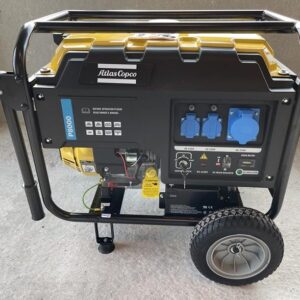
Power distribution equipment must also be rated for continuous duty. The cables, connectors, and panels that carry the generator's output to the loads need to handle the full current without overheating. Undersized distribution gear is a common cause of failures during extended runs.
Maintenance Access During Operation
Long operating periods mean that routine maintenance tasks - checking oil, changing filters, inspecting belts - may need to happen while the generator is running or between shifts. A generator that requires disassembling half the enclosure to reach the dipstick is a generator that will get neglected.
Look for generators with service points grouped on one side. Remote oil drains and filter housings that can be changed without tools save time and reduce the chance of mistakes. A generator with a large access door and internal lighting makes nighttime checks safer and faster.
Some generators include an automatic oil makeup system. A reservoir and a small pump keep the oil level within the correct range without anyone opening the engine. For generators that run for weeks at a time, this feature alone can prevent a low-oil shutdown.
Noise and Exhaust Considerations
Noise matters less for remote industrial sites, but for generators near occupied buildings or residential areas, sound levels become a concern. Industrial generators are inherently loud, but some designs include sound-attenuating enclosures that reduce noise by 10 to 20 decibels compared to open-frame units. The trade-off is weight and cost, and reduced airflow for cooling, so the enclosure must be properly engineered.
Exhaust routing is another practical detail. A generator that vents hot exhaust gases close to the intake will pull in hot air and reduce efficiency. Proper ducting or a vertical exhaust stack can solve this. For generators installed inside a building, the exhaust must be connected to a flue that meets local codes and does not allow carbon monoxide to enter occupied spaces.
Power distribution equipment for long-running generators should include proper disconnects and overcurrent protection at the generator itself. This allows the generator to be isolated from the load for maintenance without disrupting the rest of the installation. It also provides a safe point for connecting a load bank during testing.
Startup and Shutdown Sequencing
For generators that start and stop automatically based on load or schedule, the control system should handle the transition smoothly. A cold start that immediately applies full load is hard on the engine. A warm-up period of a few minutes at no load allows oil to circulate and components to reach operating temperature before the generator takes load. Similarly, a cool-down period before shutdown prevents heat soak that can damage bearings and seals.
These features are built into the generator's controller, but the operator should verify that the settings match the application. Some controllers allow the warm-up and cool-down times to be adjusted. For generators that run continuously, the startup sequence is less relevant, but for those that cycle on and off over long periods, it is important.
Putting It All Together
Choosing a generator for long operating periods is not just about kilowatt rating. Fuel system design, cooling capacity, control features, load management, and maintenance access all affect how well the generator will perform over days or weeks of continuous use. A generator that is well matched to the application will run reliably with fewer interruptions and lower operating costs. The small details - a dual fuel filter, a remote monitoring port, an automatic oil makeup system - add up to a machine that can be trusted when it matters most.